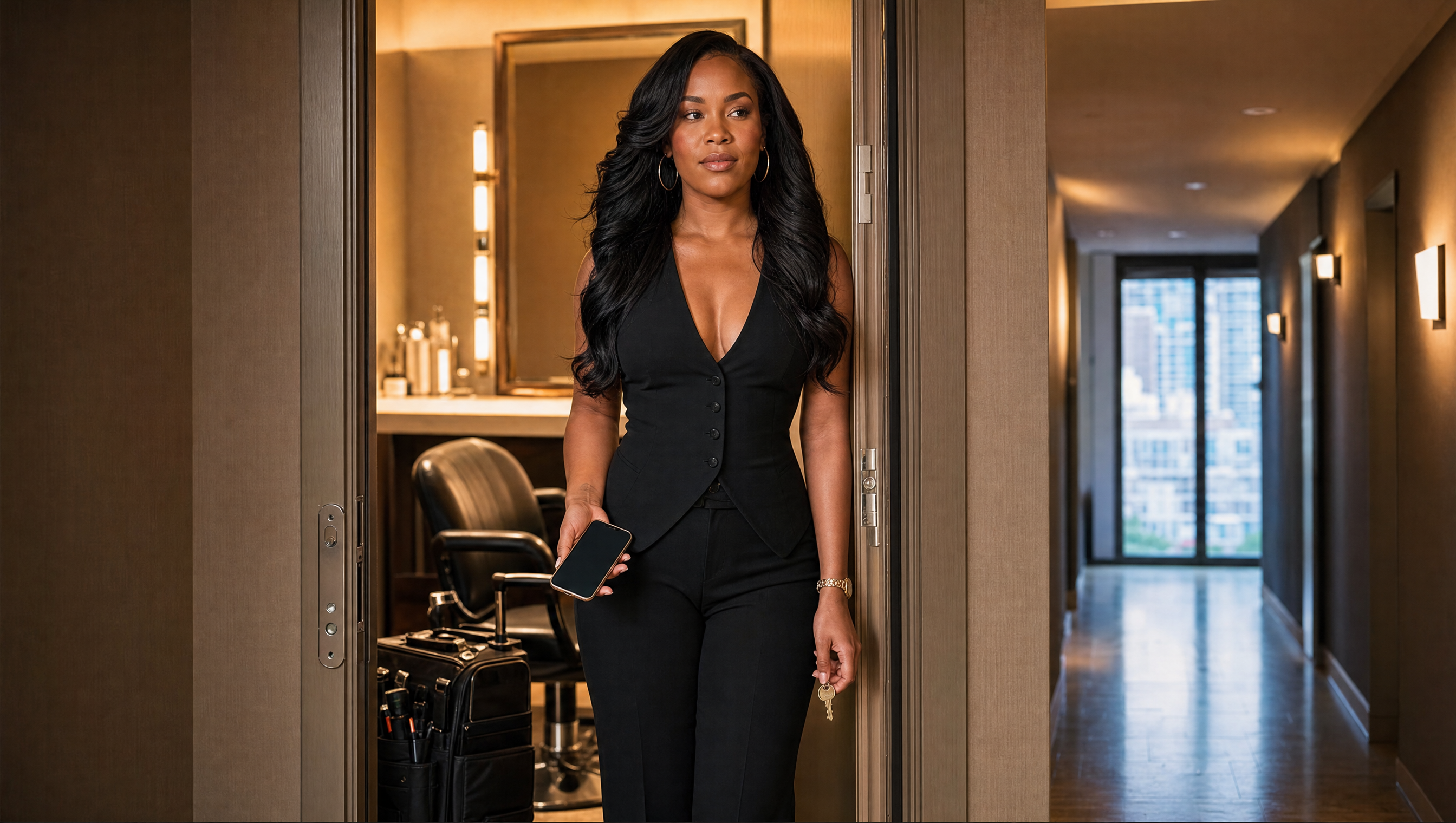
The Thing Nobody Mentions When You Go Independent
At the salon there were six other people in the room. In a suite, or at a client's kitchen table, there is you. Most of the time that is the whole appeal. Once in a while it is the whole risk.
This is not about fear. Beauty work is one of the safest industries there is, and the overwhelming majority of clients are exactly who they say they are. It is about the fact that the small habits that keep you safe cost nothing, take seconds, and are easiest to build before you ever need them. The pros who have worked alone for twenty years all do the same handful of things without thinking. Here they are, so you can start on day one instead of year five.
The habits that keep you safe cost nothing and take seconds. Build them before you need them, not after.
Before the Client Arrives
Know who is coming. A booking with a real name, a phone number, and a paid deposit is a different thing from a first-time DM at 10 p.m. asking for a walk-in. Require the basics for new clients, every time, and put it in your booking flow so you never have to ask in person: name, number, the service, a deposit. Anyone who refuses to give a name and a number to book a two-hour appointment has told you something.
Tell someone. One text to a person you trust: who, where, when, and when you expect to be done. Some pros share a live location with a partner or a friend for every mobile appointment. It takes five seconds and it is the single habit that matters most.
Meet new clients in the daytime when you can. Save the 8 p.m. slots for the regulars you know.
Check the room before they walk in. Your phone charged and in your pocket, not on the counter across the room. The exit path clear. The door unlocked from the inside without a key. If you use a smart lock, know how to open it fast from your side.
In the Room
Position matters. Work with the door in your line of sight when you can, and with yourself between the client and the exit, not the other way around. It is not a rule you announce; it is how you set up the chair.
Keep your phone on you. Not in a bag, not on a shelf. A phone in your pocket with a trusted number one tap away is the most important tool in the room, and it is the one pros most often put down.
Trust the feeling. Every experienced pro has a story about the client who was fine on paper and wrong in the room. If something feels off, you do not need a reason and you do not owe an explanation. "I'm going to have to stop here today; I'll refund your deposit." Then stand up. The worst outcome of stopping early is an awkward ten minutes. The worst outcome of not stopping is not.
Keep boundaries plain and pleasant. Where clients wait, whether guests are allowed, whether they can come back to the private area. Say it once in your booking confirmation, in writing, so nobody is surprised in the room.
If You Go to Them
Mobile work adds one layer: their space, their rules, their door. A few things the mobile pros who have done it for years will tell you.
First appointments in a home are the highest-risk moment in the industry. Some pros will not do them for new clients at all, and offer a suite or a public setting for the first visit. Others require a video call first, a deposit, and the address a day early so they can look at it.
Send the address to your person before you leave and a text when you arrive and when you leave. Park where you can pull out forward, not where you have to reverse out of a driveway with your kit.
Bring only the kit for that service. A rolling case is a great tool and a bad thing to be carrying while you are trying to leave quickly.
Set a firm end time in the booking and hold it. "I have a 2 p.m. after you" is a sentence that keeps appointments on schedule and keeps you moving.
And if a client's home does not feel right when you arrive, you can leave before you unpack. Deposit refunded, no explanation. You will lose an appointment. You will not lose more than that.
Late Nights and Empty Buildings
Suite buildings empty out. If you are the last one working, the building is yours and so is the parking lot.
Ask the owner what the building does after hours: which doors lock, whether the lot is lit, whether there is a camera at the entrance, whether the smart lock logs entries. Those are fair questions and a good owner has answers.
Walk out with your keys in your hand and your phone in the other, not digging for either. Have the car unlocked as you approach. If a client is your last of the night, it is fine to walk out together; most will offer.
Keep a small light in your kit. Hallway bulbs go out. And keep the number for the building's owner or manager saved, not just the app; a locked-out client at 9 p.m. is a call, not a text.
If Something Happens
Get out first, sort it out second. Leave the kit, leave the money, leave the appointment half finished. Nothing in that room is worth more than getting to the hallway.
Call someone the moment you are safe. Your person first, then the police if anything crossed a line. Write down what happened while it is fresh: the name on the booking, the number, the time, what was said. That note is what makes a report real later.
Block the client everywhere and tell your booking platform. Any platform worth using has a way to flag a client, and on the ones that hold a deposit and a phone number for every booking, Cabas included, a flagged client cannot simply book you again under a new DM. Tell other pros in your building, plainly and without drama. This industry protects its own when it knows.
And take the next day if you need it. Working alone is a freedom. The habits above are what let you keep it.